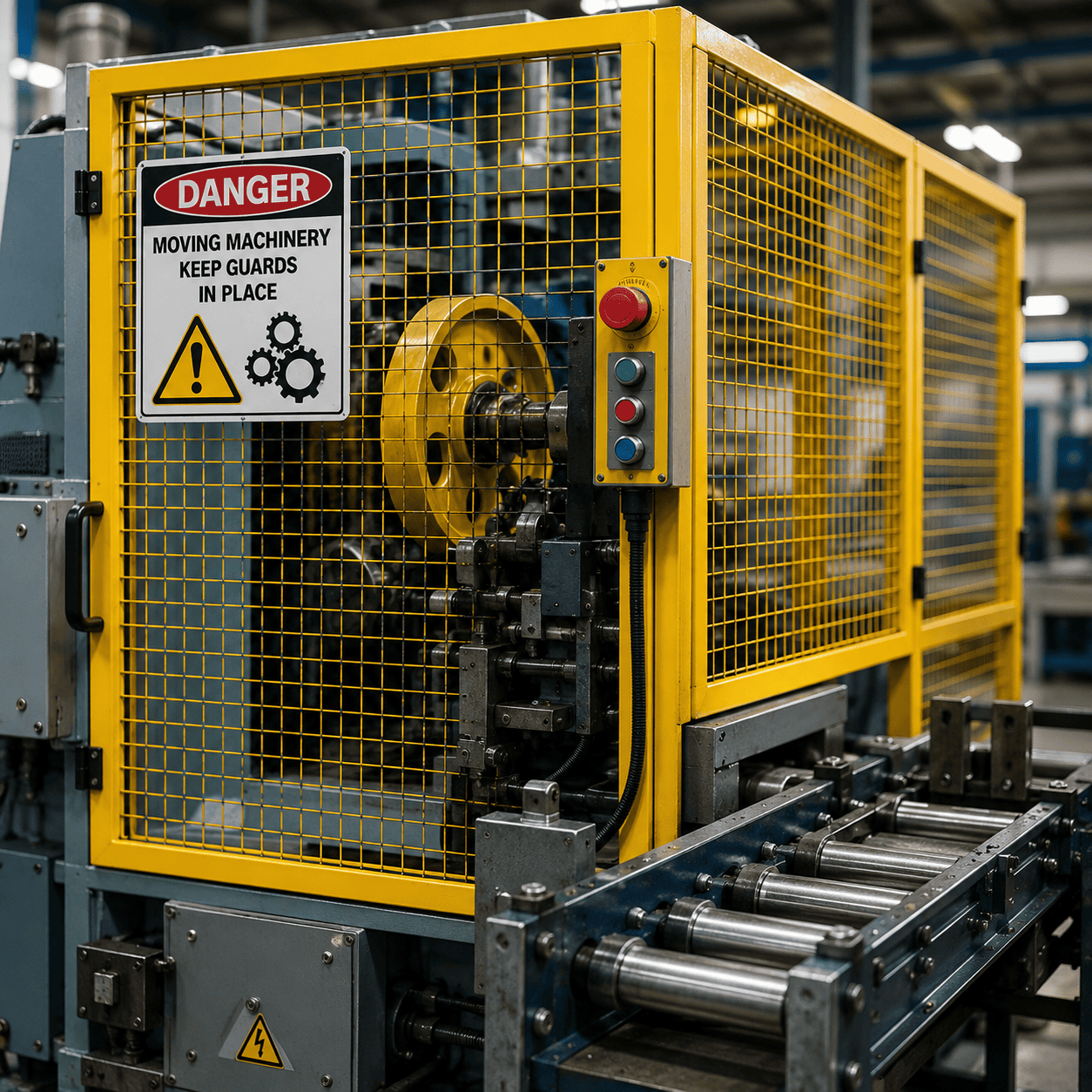
What Is a PHSR? A Guide to Pre-Start Health and Safety Reviews in Ontario

PHSR stands for Pre-Start Health and Safety Review. In Ontario, a PHSR is a formal engineering review used to determine whether certain industrial equipment, processes, structures, or protective measures comply with applicable health and safety requirements before they are put into service.
If you are installing new machinery, modifying existing equipment, introducing a new production process, or making certain changes to an industrial facility, you may need a PHSR before the equipment or process can safely begin operating.
A PHSR is more than a general equipment inspection. It is an engineering assessment that considers the hazards associated with the equipment or process and the requirements that apply to the particular installation.
For Ontario manufacturers, plant managers, facility managers, contractors, equipment suppliers, and other businesses working with industrial equipment, understanding what a PHSR is and when one may be required is an important part of planning a safe and compliant project.
phsr banner image

What Does PHSR Stand For?

PHSR means Pre-Start Health and Safety Review.
The term describes an engineering review conducted before certain equipment or processes are put into service.
In Ontario, PHSRs are primarily associated with Section 7 of Ontario Regulation 851, the Industrial Establishments Regulation, under the Occupational Health and Safety Act (OHSA).
The purpose is to identify potential hazards and determine whether applicable health and safety requirements have been addressed before startup.
The review may consider the equipment itself, the way it has been installed, associated safeguarding and control systems, the surrounding environment, and other aspects of the process that could affect worker health and safety.

Contact Us

This field is required.

In simple terms, what is a PHSR?

A PHSR answers an important question:
Has the equipment, process, or protective system been engineered and installed so that the applicable health and safety requirements have been addressed before it is put into operation?
The answer is based on an assessment of the specific equipment and circumstances—not simply on the name or type of machine involved.

Why Is a PHSR Required?

Industrial machinery and processes can create hazards that are not always apparent during normal operation.
Examples can include:

Moving mechanical components

Points of operation

Unexpected machine startup

Inadequate guarding

Electrical hazards

Stored energy

Material-handling hazards

Combustible dust

Fire and explosion risks

Hazardous substances

Inadequate emergency stopping

A PHSR provides an opportunity to identify these types of concerns before equipment is placed into service.
This preventive approach is important because correcting a safety issue during the design or installation phase is generally preferable to discovering the problem after commissioning, during an inspection, or after an incident.
A PHSR can also help project stakeholders understand what changes may be necessary before a machine or process is ready for operation.

When Is a PHSR Required in Ontario?

A PHSR is not automatically required for every new machine or piece of equipment.
Whether a review is required depends on the specific circumstances and the applicable requirements under Ontario’s occupational health and safety legislation.
Situations that may trigger PHSR requirements can include certain installations, equipment modifications, safeguarding systems, hazardous processes, and other circumstances identified in the applicable regulation.
Examples of equipment and applications that may warrant consideration include:
  • New industrial machinery
  • Modified production equipment
  • Machine safeguarding systems
  • Conveyors and material-handling equipment
  • Dust collection systems
  • Spray booths
  • Mixing and blending equipment
  • Equipment handling combustible powders
  • Certain storage or racking systems
  • Equipment involving flammable liquids or gases

The exact determination depends on the project.

That is why it is generally better to determine whether a PHSR is required early in the project, rather than waiting until equipment is ready to start operating.

Contact Us

This field is required.

Who Performs a PHSR?

A PHSR must be performed by a person who meets the qualifications specified by Ontario's requirements.
For engineering reviews, this commonly involves a Professional Engineer (P.Eng.) with appropriate knowledge and experience for the equipment, process, and hazards being assessed.
The engineer needs to understand more than the machinery itself. Depending on the project, the review can involve mechanical, electrical, structural, controls, process, fire, ventilation, or other engineering considerations.
The appropriate expertise can therefore be particularly important for complex industrial installations.
For example, an industrial dust collection system may involve airflow, mechanical equipment, electrical controls, combustible-dust hazards, fire protection, and explosion protection. A meaningful engineering assessment needs to consider how these elements interact.

What Does a PHSR Include?

There is no single checklist that applies identically to every PHSR.
The scope depends on the equipment, process, installation, hazards, and applicable requirements.
A PHSR may involve reviewing:
  • Equipment specifications
  • Engineering drawings
  • Equipment layouts
  • Manufacturer documentation
  • Machine guarding
  • Safety devices
  • Emergency-stop systems
  • Control systems
  • Electrical components
  • Mechanical hazards
  • Structural elements
  • Ventilation
  • Fire and explosion hazards
  • Applicable codes and standards
  • Installation conditions
  • Existing protective measures
The engineer may also need to visit the facility to inspect the equipment and understand how it has been installed and integrated into the operation.
The result is documented engineering information identifying the applicable requirements and any deficiencies or corrective measures that need to be addressed.
machine guarding

Is a PHSR the Same as a Safety Inspection?

No. A PHSR and a general safety inspection are not the same thing.
A safety inspection may be used to identify unsafe conditions during the operation of a facility or piece of equipment.
A PHSR is a specific engineering review associated with the requirements for certain industrial installations and processes before they are put into service.
The distinction matters because a PHSR involves evaluating applicable engineering and regulatory requirements for the specific equipment or process.
A machine can therefore appear to be functioning normally while still requiring engineering changes or documentation before it can appropriately be placed into service.

Contact Us

This field is required.

What Standards Are Considered During a PHSR?

A PHSR is based on the applicable Ontario regulatory requirements, but other engineering standards and codes may also be relevant depending on the equipment and application.
These can include applicable CSA and ANSI standards, along with other codes or standards relevant to the particular hazard or system.
For example, a project involving combustible dust may require consideration of standards and requirements related to dust collection, fire prevention, explosion venting, isolation, or other protective measures.
Similarly, machinery may require consideration of applicable safeguarding, electrical, controls, or mechanical standards.
The engineer determines which requirements and standards are relevant to the specific project.
This is one reason a PHSR should not be viewed simply as a form to be completed. It is an engineering assessment that requires the reviewer to understand the equipment, process, hazards, and applicable requirements.

PHSRs for Dust Collection and Explosion Protection

Some industrial applications require particularly careful consideration because of the hazards involved.

Combustible dust is one example.
Industries such as woodworking, food processing, agriculture, pharmaceutical manufacturing, and certain metalworking operations can generate dust that presents fire or explosion risks under the right conditions.
Wintek Engineering provides engineering services for these types of industrial environments, including dust collection system design, airflow analysis, collector selection, system upgrades, controls and automation, and combustible-dust risk considerations.

Wintek also provides explosion protection engineering, including risk assessments, gap analysis, explosion venting, suppression, isolation, flame arrestors, spark detection, and related mitigation measures. Its PHSR support includes applications such as dust collectors, spray booths, mixing and blending equipment, combustible-powder conveying systems, and solvent dispensing or recovery systems.
This broader engineering capability can be valuable when a PHSR identifies an issue that requires an engineered solution rather than simply additional paperwork.

industries we serve

What Happens If a PHSR Finds a Problem?

A PHSR is not simply a pass-or-fail exercise.
If the engineering review identifies a safety or compliance concern, the issue should be documented and addressed as appropriate before the equipment or process is placed into service.
Depending on the finding, the solution could involve:
  • Modifying machine guarding
  • Adding or changing safety controls
  • Correcting electrical or mechanical issues
  • Modifying ventilation
  • Improving emergency-stop provisions
  • Changing equipment layout
  • Adding explosion protection
  • Modifying a dust collection system
  • Providing additional engineering documentation
The exact corrective action depends on the issue identified.
The benefit of involving an engineer early is that deficiencies can potentially be addressed while the equipment is still being designed, installed, or commissioned.

FAQ about PHSRs

There is no standard timeframe that applies to every PHSR.
A straightforward review of a single piece of equipment may be very different from a complex industrial installation involving multiple machines, integrated controls, hazardous materials, dust collection, explosion protection, or multiple engineering disciplines.
The availability and quality of project documentation can also affect the process.
Providing equipment specifications, drawings, layouts, manufacturer information, and other relevant documentation early can help the engineer understand the project and establish an appropriate scope.
No.
The fact that equipment is new does not, by itself, mean that a PHSR is automatically required.
The requirement depends on the circumstances described in the applicable Ontario requirements.
Conversely, businesses should not assume that a machine is exempt simply because it is familiar, commercially available, or supplied with manufacturer’s documentation.
When there is uncertainty, determining the applicable requirements before startup is the safer approach.

The Bottom Line: What Is a PHSR?

A Pre-Start Health and Safety Review (PHSR) is a formal engineering review used in Ontario to assess certain industrial equipment, processes, protective structures, and installations before they are put into service.
It is intended to identify hazards and determine whether applicable health and safety requirements have been addressed.

A PHSR is not required for every machine or project. Whether one is necessary depends on the specific circumstances and applicable Ontario requirements.
If you are unsure whether your equipment requires a PHSR, it is better to determine the answer before commissioning rather than after the equipment is already operating.

How Can You Prepare for a PHSR?

A PHSR can be easier to scope when the engineer has good information about the project.
Depending on the application, useful documentation may include:
  • Equipment specifications
  • Manufacturer information
  • Engineering drawings
  • Equipment layouts
  • Electrical drawings
  • Control-system information
  • Safeguarding details
  • Operating information
  • Installation details
  • Information about hazardous materials
  • Existing engineering or inspection reports
  • Site photographs
Not every PHSR requires every item on this list.
The key is to give the engineer enough information to understand what the equipment does, how it will be installed and operated, and what hazards may be present.

Contact Us

This field is required.

Why Choose Wintek Engineering for a PHSR?
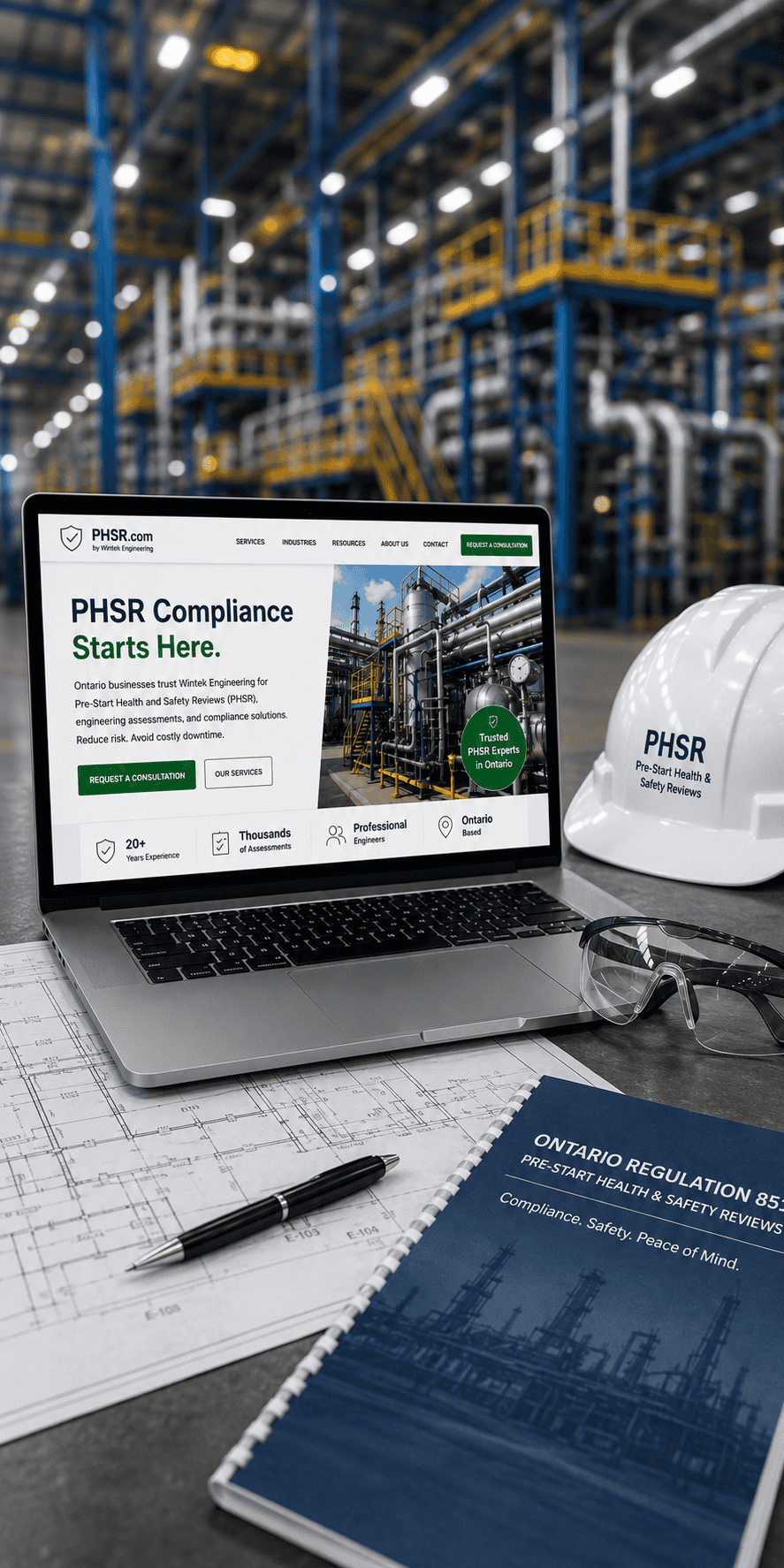
Wintek Engineering brings an established engineering background to industrial safety and compliance projects. The company has operated since 1994, providing a long-standing engineering presence in Ontario.
Its advantage is not limited to producing PHSR documentation. Wintek’s broader industrial capabilities include mechanical and electrical engineering, dust collection, explosion protection, controls and automation, and related engineering solutions.
That multidisciplinary perspective can be particularly useful when a PHSR involves complex equipment or when the review identifies a problem requiring further engineering.
Wintek’s documented approach to explosion protection, for example, combines risk assessment, engineering design, regulatory considerations, and practical mitigation rather than simply identifying hazards.
Likewise, its dust collection work encompasses system design, airflow, equipment selection, controls, upgrades, energy efficiency, and combustible-dust considerations.
For clients, that means the engineering review can be part of a broader solution when the project requires it.
phsr services

Planning a new installation or modification in Ontario?

Contact Wintek Engineering to discuss whether a PHSR may be required and what your project involves.
Scroll to Top