Ultimate Guide to Pre-Start Health and Safety Reviews (PHSRs) in Ontario

If you are installing new machinery, modifying existing equipment, introducing a new production process, or making changes to an industrial facility in Ontario, you may need a Pre-Start Health and Safety Review (PHSR) before the equipment or process is put into operation.
A PHSR is a formal engineering review used to identify potential hazards and determine whether applicable health and safety requirements have been addressed before equipment, protective structures, or processes are put into service.
For Ontario employers, equipment suppliers, manufacturers, contractors, and facility managers, understanding when a PHSR is required—and what the review involves—can help prevent delays, identify safety issues before startup, and provide the documentation needed to demonstrate compliance.
This guide explains what a PHSR is, when one may be required, who performs it, what the process involves, common equipment that can trigger a review, applicable standards, exemptions, and how to prepare for a successful PHSR.
phsr

What Is a PHSR?

PHSR stands for Pre-Start Health and Safety Review.
A PHSR is an engineering assessment performed before certain machinery, equipment, protective structures, processes, or modifications are put into service. Its purpose is to determine whether applicable provisions of Ontario's occupational health and safety requirements have been addressed.
In Ontario, PHSRs are associated primarily with Section 7 of Ontario Regulation 851, the Industrial Establishments Regulation, under the Occupational Health and Safety Act (OHSA).
The review is intended to identify hazards and compliance gaps before equipment begins operating—not after an incident, injury, or Ministry inspection.
A PHSR may involve reviewing engineering drawings, equipment specifications, safeguarding systems, installation details, control systems, applicable codes and standards, and the conditions in which equipment will operate.
The final documentation provides the employer with a record of the engineering review and any requirements or recommendations that must be addressed.
In simple terms: a PHSR helps answer the question, “Is this equipment or process ready to be put into service from a health and safety perspective?”

Contact Us

This field is required.

Do I Need a PHSR?

Not every piece of industrial equipment requires a PHSR.

A PHSR is required when the circumstances described in Ontario's occupational health and safety legislation apply. Determining whether your project triggers a review depends on the equipment, process, protective measures, hazards involved, and the nature of the installation or modification.

Common situations that may require a PHSR include:
  • Installing new machinery or production equipment
  • Modifying existing machinery in a way that affects safety
  • Installing safeguarding devices or protective systems
  • Introducing equipment that involves hazardous processes or materials
  • Installing or modifying certain storage or material-handling systems
  • Equipment or processes involving combustible dust or explosion hazards
  • Installing systems involving flammable liquids or gases
  • Significant changes to an existing industrial process or installation
The exact requirements depend on the circumstances of the project. When there is uncertainty, it is prudent to determine the PHSR requirements before equipment is installed or commissioned rather than discovering a requirement after the project is complete.

What Is the PHSR Process?

Although every project is different, a typical PHSR follows a structured engineering process.

Define the project

The engineer first needs to understand what equipment or process is being installed, modified, or commissioned.
Relevant information may include equipment specifications, drawings, layouts, operating information, and details about the intended use.

Identify applicable requirements

The equipment and application are reviewed against applicable provisions of Ontario Regulation 851 and relevant engineering codes and standards.

Assess hazards and safeguards

The engineer evaluates potential hazards associated with the equipment and determines whether appropriate protective measures have been incorporated.
Depending on the application, this can include guarding, controls, emergency stops, electrical systems, ventilation, structural elements, fire protection, or explosion protection.

Review documentation and installation

Drawings, specifications, manufacturer information, and installation conditions may be reviewed. A site visit may also be required depending on the nature and complexity of the project.

Identify deficiencies

If the review identifies safety or compliance gaps, these should be clearly documented so that the employer, contractor, equipment supplier, or other responsible party understands what needs to be addressed.

Complete the engineering report

Once the applicable requirements have been assessed and outstanding issues addressed, the PHSR documentation can be completed in accordance with the requirements applicable to the project.
The earlier potential safety issues are identified, the easier it generally is to incorporate corrections into a project.

Ontario PHSR Requirements

Ontario's PHSR requirements are established under the Occupational Health and Safety Act and Ontario Regulation 851 (Industrial Establishments).
A PHSR must be conducted by a person with the qualifications required by the regulation. In many cases, this involves a Professional Engineer who is qualified to assess the equipment, process, or protective system in question.
The review considers the applicable provisions of the regulation and other relevant engineering standards and codes.
  • Machine guarding
  • Safety controls and interlocks
  • Emergency stopping systems
  • Electrical safety
  • Mechanical hazards
  • Structural considerations
  • Material handling
  • Ventilation
  • Fire and explosion hazards
  • Applicable CSA standards
  • Applicable ANSI standards
  • Other relevant codes, standards, and engineering requirements
The objective is not simply to produce a document. The engineering review should identify potential issues that could affect the safe operation of the equipment and provide a clear path toward addressing those issues.

Contact Us

This field is required.

Are There PHSR Exemptions?

There are circumstances in which the PHSR requirements do not apply or where particular equipment or situations may fall outside the scope of the regulation.
However, determining whether something is genuinely exempt requires looking at the specific circumstances rather than assuming that a particular type of equipment is automatically exempt.
Factors such as the type of equipment, the nature of the modification, the industrial establishment, the hazards involved, and the specific regulatory provision can affect the determination.
For this reason, phrases such as “this machine never needs a PHSR” can be misleading.
If you believe your equipment may be exempt, it is important to confirm the applicable requirements before relying on that assumption.

Common Equipment That May Require a PHSR

PHSRs can apply to many different types of industrial equipment and installations.
Examples can include:
  • Industrial machinery
  • Production and processing equipment
  • Machine safeguarding systems
  • Conveyors and material-handling systems
  • Dust collection systems
  • Spray booths
  • Mixing and blending equipment
  • Equipment handling combustible powders
  • Certain storage and racking systems
  • Systems involving flammable liquids
  • Equipment incorporating safety devices or protective systems
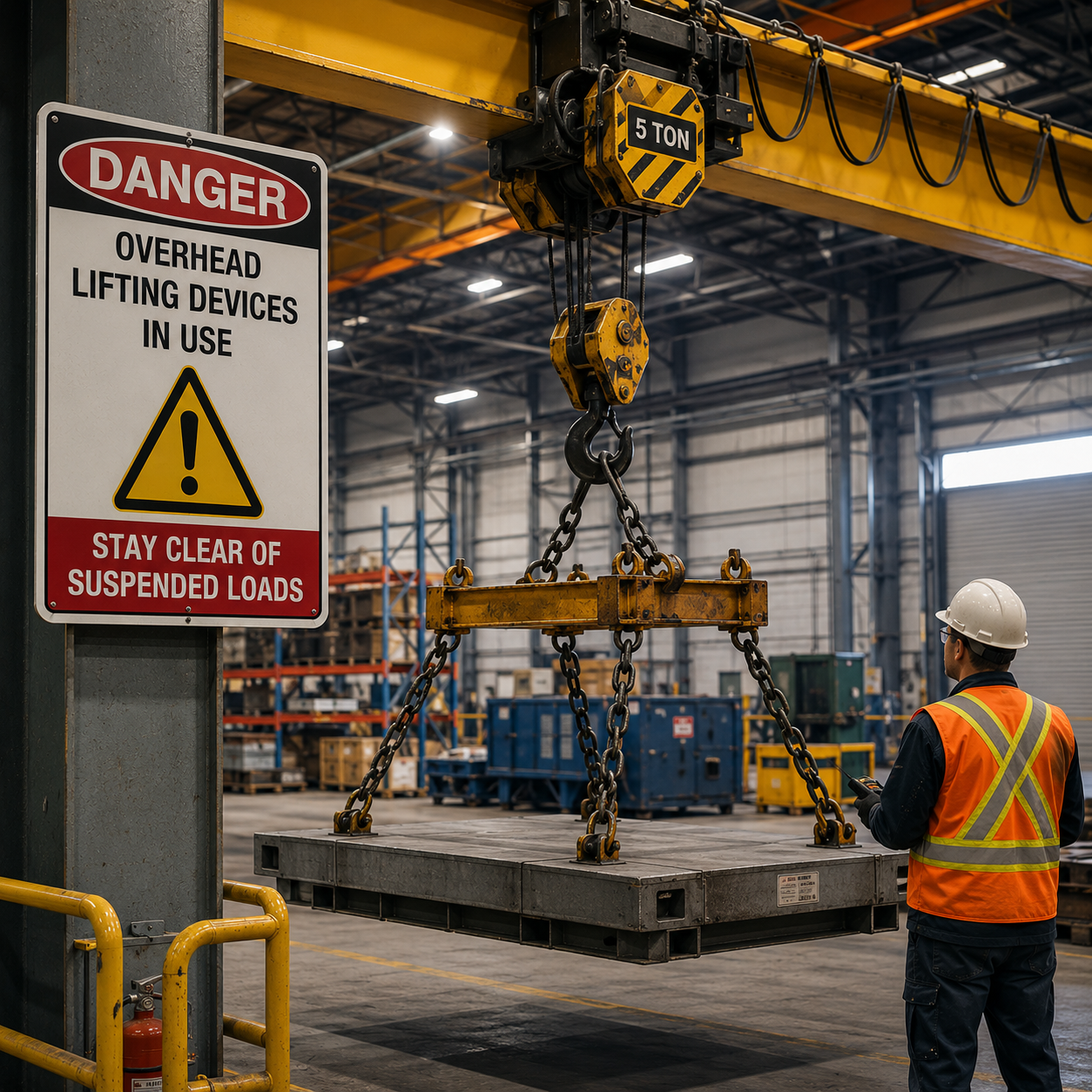
The requirement depends on the specific circumstances, so the equipment type alone does not necessarily determine whether a PHSR is required.
For example, Wintek’s engineering team provides PHSR support for explosion-sensitive applications including dust collectors, spray booths, mixing and blending operations, combustible-powder conveying systems, and solvent dispensing or recovery systems.
lifting devices

PHSRs and Combustible Dust or Explosion Hazards

Certain industrial processes create additional hazards that require careful engineering consideration.
Combustible dust can be generated by operations involving materials such as wood, food ingredients, agricultural products, pharmaceuticals, and certain metals. Under the right conditions, airborne combustible dust can present a fire or explosion hazard.
Wintek provides engineering services for facilities where combustible dust, flammable vapours, or other explosion hazards are present. Its services include explosion risk assessments, gap analysis, explosion mitigation engineering, and PHSR support for applicable equipment.
Potential protection measures can include explosion vents, suppression systems, isolation systems, flame arrestors, spark detection, and compliant dust collection arrangements.
This is an example of why a PHSR should be approached as an engineering assessment rather than simply a paperwork exercise.

Contact Us

This field is required.

PHSR Checklist: What Should You Have Ready?

Preparing information before an engineer begins the review can make the process more efficient.
Depending on your project, useful information may include:
  • Equipment name and description
  • Manufacturer and model information
  • Equipment specifications
  • Engineering drawings
  • Layout drawings
  • Electrical drawings
  • Control-system information
  • Safeguarding details
  • Operating procedures
  • Installation information
  • Applicable manufacturer documentation
  • Information about hazardous materials
  • Details of any previous modifications
  • Existing inspection or engineering reports
  • Site photographs
Not every project will require all of these items.
The most important thing is to provide enough information for the engineer to understand what the equipment does, how it will be installed, how it will be operated, and what hazards may be present.
If you believe your equipment may be exempt, it is important to confirm the applicable requirements before relying on that assumption.

CSA and ANSI Standards: What Do They Have to Do With a PHSR?

CSA and ANSI standards can play an important role in evaluating industrial equipment and safety systems.

CSA standards are Canadian standards developed or administered through the Canadian Standards Association and are frequently relevant to machinery, electrical systems, industrial installations, and other engineering applications.

ANSI, the American National Standards Institute, coordinates standards development in the United States. ANSI-accredited standards can also be relevant when evaluating machinery and safety systems, particularly where equipment has been designed or manufactured according to North American standards.

A PHSR is not simply a “CSA inspection” or an “ANSI inspection.” The engineer must determine which requirements and standards are relevant to the specific equipment and application.
Depending on the project, this may involve reviewing multiple standards alongside Ontario legislation and other applicable codes.
This is particularly important when equipment has been imported, substantially modified, integrated into a larger production system, or designed for a specialized industrial application.
industries we serve

Industries That Use PHSRs

PHSR requirements can arise across a wide range of Ontario industrial environments.
Wintek supports industrial applications including:
  • Manufacturing
  • Food processing and packaging
  • Wood products and sawmills
  • Agricultural and grain handling
  • Metalworking and fabrication
  • Chemical manufacturing
  • Pharmaceutical and nutraceutical production
  • Municipal facilities
  • Public works operations
  • Facilities involving dust collection or combustible materials
Each industry presents different hazards and equipment configurations. A PHSR therefore needs to be approached in the context of the actual facility and process rather than as a generic checklist.

Frequently Asked Questions About PHSRs

A PHSR must be conducted by a person who meets the qualifications specified by Ontario’s requirements. For engineering reviews, this commonly means a qualified Professional Engineer with appropriate knowledge and experience for the equipment or process being assessed.

A PHSR should be considered early in the project—before equipment or a modified process is placed into service. Starting the review early can help identify issues while changes can still be incorporated into the project.

No. The requirement depends on the specific circumstances and applicable provisions of Ontario Regulation 851. A new machine should not automatically be assumed to require—or not require—a PHSR without assessing the project.
It can. Significant modifications to equipment or safety systems may trigger PHSR requirements. The nature and extent of the modification need to be considered.
The purpose of a pre-start review is to assess applicable health and safety requirements before the equipment or process is put into service. If equipment is already operating and you are uncertain about its compliance status, seek qualified engineering advice rather than assuming that a retrospective review is equivalent to a pre-start review.
The identified issue should be documented and addressed before the equipment is placed into service where the applicable requirements require it. The responsible parties can then work with the engineer and equipment suppliers to implement the necessary changes.
There is no single timeframe. A straightforward equipment review may be substantially different from a complex installation involving multiple systems, custom engineering, hazardous materials, or extensive documentation.
Providing complete project information at the outset can help reduce unnecessary delays.
The cost depends on the complexity of the equipment or process, the documentation available, site requirements, engineering disciplines involved, and the scope of the review. A qualified engineering firm can provide a project-specific quotation once the requirements are understood.

Why Choose Wintek Engineering for PHSR Services?

Wintek Engineering brings an established engineering background to PHSR and industrial safety projects.
The company has been operating since 1994, giving it decades of engineering experience and an established presence in Ontario.
Its approach combines practical engineering advice with regulatory and standards expertise. Wintek’s related industrial engineering services include explosion protection, dust collection, controls and automation, and other engineering solutions that can intersect with PHSR requirements.
For example, Wintek’s explosion protection work incorporates risk assessment, mitigation design, equipment integration, and applicable CSA and NFPA requirements. Its dust collection engineering includes system design, airflow analysis, collector selection, controls, upgrades, and consideration of combustible-dust risks.
That broader engineering capability can be valuable when a PHSR identifies an issue that requires more than documentation. Instead of simply identifying a deficiency, the engineering team can help develop a practical solution appropriate to the equipment and facility.
The objective is straightforward: engineering assessments, compliance solutions, trusted expertise.
phsr 2

Get Help With Your Ontario PHSR

If you are installing, modifying, or commissioning industrial equipment in Ontario, determining your PHSR requirements early can help prevent unnecessary project delays and address safety concerns before startup.

Wintek Engineering provides PHSR support for industrial equipment and processes throughout Ontario, including applications involving machinery, safeguarding, dust collection, combustible materials, explosion risks, and other specialized industrial systems.

If you are unsure whether your project requires a PHSR, the first step is to discuss the equipment, process, location, and planned changes with a qualified engineering professional. Contact Wintek Engineering to discuss your PHSR requirements or request an assessment.
Scroll to Top