Do I Need a PHSR? How to Determine If a PHSR Is Required in Ontario
If you are installing new industrial equipment, modifying existing machinery, changing a production process, or introducing a new safety system in an Ontario workplace, you may be wondering: Do I need a PHSR?
A Pre-Start Health and Safety Review (PHSR) is required in certain circumstances under Ontario’s occupational health and safety requirements. However, not every machine, installation, or modification automatically requires a PHSR.
Determining whether your project requires a review depends on the specific equipment, process, modification, hazards, and circumstances involved.
The safest approach is to identify the PHSR requirements before equipment is put into service. Finding out that a review was required after installation or startup can create avoidable delays and may require changes to equipment that is already operational.
This guide explains some of the situations in which a PHSR may be required, common equipment and modifications to consider, questions to ask, and what to do if you are uncertain.
wintek graphic

Quick Answer: Do I Need a PHSR?

You may need a PHSR if you are installing, modifying, or introducing certain industrial equipment, processes, or protective systems covered by Ontario's requirements.
PHSR requirements are primarily associated with Section 7 of Ontario Regulation 851, the Industrial Establishments Regulation, under Ontario’s Occupational Health and Safety Act (OHSA).
A new machine does not automatically mean a PHSR is required. Likewise, an existing machine does not automatically mean a PHSR is unnecessary simply because it has been operating for years.
The circumstances of the particular project must be evaluated against the applicable requirements.
If you are unsure, it is best to determine the answer during the planning, design, or installation stage rather than waiting until commissioning.

Contact Us

This field is required.

When Is a PHSR Required?

Ontario's PHSR requirements apply to specified circumstances involving industrial establishments and equipment.
A review may need to be considered when a project involves:
  • New industrial machinery
  • Significant equipment modifications
  • New or modified safeguarding systems
  • Certain protective structures or devices
  • New production processes
  • Equipment involving hazardous materials
  • Equipment or processes involving combustible dust
  • Certain flammable-liquid applications
  • Material-handling or storage systems
  • Changes that affect how machinery operates or is safeguarded
The exact requirement depends on the circumstances identified in the applicable regulation.
This means that determining whether a PHSR is required should involve looking at what is changing, how it will operate, what hazards are present, and which regulatory provisions apply.

Does Every New Machine Need a PHSR?

No.
This is one of the most common misconceptions about PHSRs.
Buying a new machine does not, by itself, establish that a PHSR is required.
At the same time, purchasing equipment from a reputable manufacturer does not necessarily mean that the employer has no PHSR responsibilities.
Manufacturer documentation can be an important part of the engineering review, but the equipment still needs to be considered in the context of the Ontario workplace where it will be installed and operated.
For example, integrating a machine into an existing production line can introduce new interfaces, guarding requirements, control-system considerations, or hazards that were not present when the equipment was considered by itself.
The question is therefore not simply:

“Is this a new machine?”
It is:
“Does this particular installation or change fall within the circumstances for which Ontario requires a Pre-Start Health and Safety Review?”

Can Modifying Existing Equipment Trigger a PHSR?

Yes, certain modifications to existing equipment can create a PHSR requirement.
This is another area where assumptions can create problems.
A modification might involve:
  • Changing machine controls
  • Adding or changing guarding
  • Installing a safeguarding device
  • Altering a production process
  • Changing equipment capacity
  • Adding equipment to an existing production line
  • Relocating or substantially changing equipment
  • Introducing new hazardous materials
  • Changing the way equipment interacts with other machinery
Not every modification requires a PHSR. The nature and extent of the change matter.
A useful rule for project planning is to consider the PHSR question before approving the modification, particularly when the change could affect worker safety or the operation of existing safeguards.

Contact Us

This field is required.

Does Adding a Safety Device Mean I Need a PHSR?

Certain safeguarding devices and protective systems can be relevant to PHSR requirements.
Examples may include:
  • Machine guards
  • Interlocks
  • Light curtains
  • Safety controls
  • Emergency-stop systems
  • Other protective devices
The presence of a safety device does not mean that every installation automatically requires a PHSR. However, the installation or modification of safeguarding can be an important trigger to investigate.
This is particularly relevant when a safety system changes the way machinery operates or protects workers from hazards.
An engineering review can help determine what requirements apply and whether the protective system has been appropriately designed and integrated.

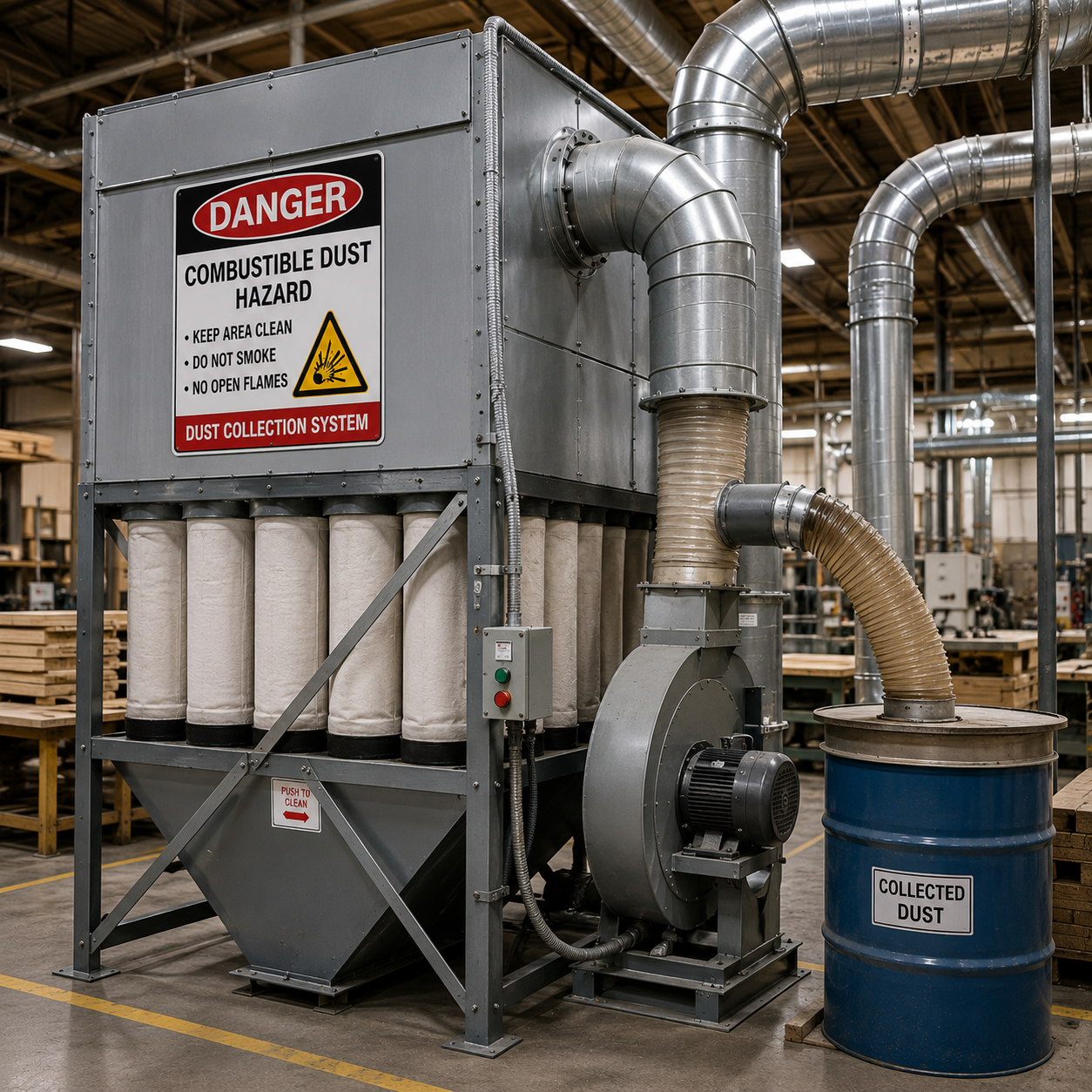
What About Dust Collection Systems?

Dust collection is an area where PHSR considerations can become particularly important.
Industrial facilities handling wood, food ingredients, agricultural products, pharmaceuticals, metal powders, or other particulate materials may face combustible-dust or occupational exposure concerns.
A dust collection system can involve much more than simply installing a fan and filter.
Depending on the application, an engineered system can include:
  • Collection hoods
  • Ductwork
  • Fans and blowers
  • Dust collectors
  • Airflow controls
  • Electrical controls
  • Explosion protection
  • Isolation systems
  • Fire protection measures
  • Automated monitoring
Wintek Engineering designs and optimizes industrial dust collection systems, including source capture, ductwork and airflow analysis, fan and blower selection, dust collector sizing, controls and automation, and combustible-dust risk considerations.
If a dust collection project involves equipment or processes that fall within PHSR requirements, the engineering review needs to consider the particular hazards and applicable requirements rather than treating the dust collector as an isolated piece of equipment.
dust collection systems

What About Combustible Dust and Explosion Risks?

Combustible dust can create additional engineering and safety considerations.
Materials such as wood, flour, grain, certain pharmaceuticals, and some metal powders can become hazardous when combustible particles are dispersed in air under the right conditions.
A facility may therefore need to consider both the PHSR requirements and the engineering measures necessary to control fire and explosion hazards.
Wintek provides explosion protection engineering that includes risk assessment, gap analysis, explosion mitigation design, venting, suppression, isolation, spark detection, and related protective measures.
Its PHSR support specifically includes explosion-sensitive applications such as:
  • Dust collectors
  • Spray booths
  • Mixing and blending operations
  • Conveying systems for combustible powders
  • Solvent dispensing or recovery systems
If your project involves combustible dust or flammable materials, it is particularly important to determine the applicable engineering and regulatory requirements before startup.

Contact Us

This field is required.

Does Adding a Safety Device Mean I Need a PHSR?

Certain safeguarding devices and protective systems can be relevant to PHSR requirements.
However, material-handling equipment can involve a variety of hazards, including moving components, pinch points, guarding, access points, emergency stops, and integration with other machinery.
The circumstances of the installation and the applicable requirements need to be assessed.
This becomes especially important when a conveyor is:
  • Added to an existing production line
  • Integrated with other machines
  • Modified significantly
  • Used to transport combustible powders or other hazardous materials
  • Connected to new control or safeguarding systems
The question should therefore be evaluated based on the specific installation rather than the equipment name alone.

Do I Need a PHSR for a Spray Booth?

A spray booth can involve several potential hazards, including flammable materials, ventilation requirements, electrical considerations, fire risks, and interaction with other facility systems.
Whether a particular spray booth installation requires a PHSR depends on the circumstances and applicable requirements.
Because spray applications can involve multiple engineering disciplines and potentially hazardous materials, it is important to evaluate the complete installation rather than looking at the booth in isolation.
Wintek's explosion protection services include PHSR support for applicable spray booth installations.

Do I Need a PHSR for a Dust Collector?

It depends on the specific installation.
A dust collector can involve mechanical, electrical, ventilation, fire, and explosion considerations.
For systems handling combustible dust, additional protective measures may be necessary depending on the material and process.
A PHSR may form part of the engineering and compliance requirements for a particular dust collection installation.
If you are installing a new dust collector or significantly modifying an existing system, determining the PHSR requirements early can help avoid problems during commissioning.

Does Imported Equipment Need a PHSR?

Imported equipment should not automatically be assumed to be exempt from Ontario requirements.
Machinery designed or manufactured outside Ontario may have been built to standards or regulatory requirements applicable in another jurisdiction. Once that equipment is installed in an Ontario workplace, the applicable Ontario requirements still need to be considered.
The engineer may need to review manufacturer documentation, drawings, safeguarding, electrical systems, controls, and other aspects of the equipment.
This can be particularly important when equipment is being integrated into a larger production system.

What If the Equipment Manufacturer Says a PHSR Isn't Required?

Manufacturer information can be useful, but it should not necessarily be treated as the final determination of Ontario PHSR requirements.
Manufacturers may design equipment for multiple jurisdictions, and the requirements applicable to the equipment in its original configuration may differ from the requirements that apply once it is installed in an Ontario industrial establishment.
The Ontario employer has responsibilities under the applicable occupational health and safety requirements.
If there is uncertainty, an appropriately qualified engineering professional can assess the specific application.

What If I'm Not Sure Whether I Need a PHSR?

If you are asking the question, it is usually better to investigate before startup.
Start by gathering information about:
  • What equipment is being installed or modified?
  • What does the equipment do?
  • Where will it be installed?
  • Is it being integrated with other machinery?
  • What safety devices or safeguarding are involved?
  • What materials are being processed?
  • Are flammable liquids, gases, or combustible dust present?
  • Has the equipment been substantially modified?
  • What drawings and manufacturer documentation are available?
  • When is the equipment expected to start operating?

This information can help an engineer determine whether a PHSR review is appropriate and establish the scope of the work.
phsr

What Happens If I Need a PHSR?

If your project requires a PHSR, the engineer will generally need to understand the equipment and application, identify the applicable requirements, review relevant documentation, assess the equipment and safeguards, and document the findings.
Depending on the project, this may include:
  • 1Reviewing project information and documentation
  • 2Identifying applicable regulatory requirements
  • 3Reviewing relevant engineering standards
  • 4Assessing equipment and safety systems
  • 5Conducting a site review where appropriate
  • 6Identifying deficiencies or required changes
  • 7Documenting the engineering findings
  • 8Addressing outstanding issues before startup
Starting this process early is important.
If a PHSR is first considered when installation is complete and the equipment is scheduled to begin production the next day, there may be little opportunity to make changes without affecting the project schedule.

What If a PHSR Finds a Deficiency?

Finding a deficiency does not necessarily mean the entire project has failed.
The purpose of the review is to identify issues so they can be addressed.
Depending on the finding, corrective action might include:

Modifying guarding

Adjusting controls

Adding safety devices

Changing equipment layout

Correcting electrical issues

Improving ventilation

Modifying dust collection

Adding explosion protection

Providing additional engineering

This is one area where an engineering firm’s broader capabilities can be valuable.
Wintek’s industrial engineering services extend beyond PHSR documentation to areas including mechanical and electrical engineering, dust collection, explosion protection, and controls and automation. Its approach is therefore suited to projects where identifying a compliance issue may lead to a need for an engineered solution.

The Bottom Line: Do I Need a PHSR?

There is no universal yes-or-no answer based solely on the fact that equipment is new, modified, imported, or installed in an industrial facility.
Whether you need a PHSR depends on the specific circumstances of the equipment, process, installation, modification, hazards, and applicable Ontario requirements.
The best time to determine whether a PHSR is required is before the equipment is put into service.
If you are uncertain, gather your equipment and project information and speak with a qualified engineering professional who can assess the specific application.

Contact Us

This field is required.

PHSR Decision Checklist

Before putting new or modified industrial equipment into service, ask:

Equipment

Is this new equipment?
Has existing equipment been significantly modified?
Is it being integrated with other machinery?

Safety

Have guarding or safeguarding systems been added or changed?
Are there new emergency stops, interlocks, light curtains, or other safety devices?

Process

Is the production process changing?
Are new materials being introduced?

Hazards

Are there mechanical, electrical, fire, or explosion hazards?
Is combustible dust present?
Are flammable liquids or gases involved?

Documentation

Do you have equipment drawings and specifications?
Do you have manufacturer documentation?
Are electrical and control-system drawings available?

Timing

Has the equipment already been commissioned?
When is it scheduled to enter service?

If several of these questions apply to your project, it is worth determining whether a PHSR is required before the equipment is put into operation.

Need Help Determining Whether Your Project Requires a PHSR?

Wintek Engineering provides PHSR support for industrial equipment and processes across Ontario, including applications involving machinery, safeguarding, dust collection, combustible materials, explosion risks, and specialized industrial systems.

Contact Wintek Engineering to discuss your project and determine the appropriate next step.
Scroll to Top