Common Equipment That Requires a PHSR in Ontario
What About Equipment That Does Not Appear on This List?
Contact Us
PHSR Support for Industrial Equipment
Through Wintek Engineering's industrial engineering capabilities, the team can address PHSR-related requirements alongside broader industrial engineering considerations.
This is particularly relevant for projects involving:
- Dust collection
- Explosion protection
- Industrial process equipment
- Equipment integration
- Automated systems
- Machine modifications
- Industrial safety and compliance
What Equipment Requires a PHSR?
A PHSR may become relevant when an employer is installing or modifying equipment or processes involving hazards addressed by Ontario's applicable requirements.
Common examples include:
Industrial machinery
Automated production equipment
Conveyors
Material-handling systems
Dust collection systems
Equipment handling combustible dust
Mixing and processing equipment
Flammable-material systems
Industrial production lines
Safeguarding and protective devices
Automated machinery and robotic systems
Certain storage and material-handling installations
Examples can include:
- Machine tools
- Presses
- Cutting equipment
- Forming equipment
- Fabrication machinery
- Production machines
- Processing machinery
- Packaging machinery
A machine should be evaluated in the context of how it will actually be installed and operated in the workplace.
What should be reviewed?
Depending on the machine, the assessment may consider:- Fixed and movable guards
- Interlocks
- Safety devices
- Emergency stops
- Operator access
- Control systems
- Moving components
- Pinch points
- Nip points
- Points of operation
- Maintenance access
- Integration with other equipment
Examples include:
- Automated production cells
- Robotic work cells
- Automated assembly equipment
- CNC production systems
- Automated packaging systems
- Integrated manufacturing lines
For example, an automated production cell may involve:
A PHSR assessment can therefore need to consider both individual equipment and the way the equipment interacts.
Examples include:
- Belt conveyors
- Roller conveyors
- Screw conveyors
- Chain conveyors
- Bucket conveyors
- Automated material-handling conveyors
The assessment may also consider emergency-stop arrangements, guarding, access, and the relationship between the conveyor and connected equipment.
If a conveyor is being integrated into an existing production line, the overall system should be considered rather than evaluating the conveyor in isolation.
Dust collection systems may be used in:
- Woodworking
- Food processing
- Agricultural operations
- Grain handling
- Metalworking
- Pharmaceutical production
- Chemical processing
- Other industrial operations
The overall system may include:
- Dust collectors
- Fans
- Ductwork
- Filters
- Hoppers
- Rotary airlocks
- Explosion vents
- Explosion suppression
- Isolation devices
- Controls
- Process connections
Examples may include systems handling:
- Wood dust
- Grain dust
- Food-product dust
- Agricultural dust
- Certain chemical dusts
- Pharmaceutical dusts
- Combustible metal dust
A PHSR assessment involving combustible dust may therefore need to be considered alongside broader dust hazard and explosion protection engineering.
The exact requirements depend on the material, process, equipment, facility, and applicable standards.
- Flammable liquids
- Vapours
- Combustible materials
- Ignition sources
- Ventilation
- Electrical equipment
- Fire protection
The assessment should consider the complete installation, including associated ventilation, process equipment, controls, and other systems that affect safe operation.
Examples include:
- Industrial mixers
- Blenders
- Process vessels
- Batch-processing equipment
- Material-processing systems
- Chemical processing equipment
- Moving components
- Agitators
- Access openings
- Interlocks
- Guards
- Emergency stops
- Pressure or process hazards
- Hazardous materials
- Equipment integration
Examples may include:
- Solvent-handling equipment
- Industrial coating systems
- Finishing processes
- Chemical processing equipment
- Storage and dispensing systems
- Equipment using flammable process materials
PHSR.com supports industrial clients dealing with equipment and processes where these hazards may be present.
Certain safeguarding devices and protective measures can also be relevant.
Examples may include:
- Machine guards
- Safety interlocks
- Presence-sensing devices
- Light curtains
- Safety mats
- Protective barriers
- Other safety-related devices
When safeguarding is installed or modified, the equipment and safety system should be evaluated as part of the overall installation.
- Unexpected movement
- Automated cycles
- Restricted access
- End-of-arm tooling
- Stored energy
- Interaction with operators
- Integration with other machines
The PHSR assessment should consider how these systems work together.
For example:
The assessment may therefore consider:
- Equipment interfaces
- Control-system integration
- Emergency stops
- Safeguarding
- Operator access
- Material flow
- Energy sources
- Process hazards
- Dust or vapour hazards
Examples include:
- Conveyors
- Hoists
- Lifting equipment
- Automated material-handling systems
- Bucket elevators
- Transfer systems
- Industrial storage and handling equipment
Existing equipment can become relevant when it is substantially modified or integrated into a different process.
Examples might include:
- Adding automation
- Installing new safeguarding
- Changing machine controls
- Adding a conveyor
- Integrating a robot
- Changing the production process
- Adding dust collection
- Changing the material being processed
- Connecting the machine to new equipment
The changes should be evaluated to determine whether additional engineering review is required.
A machine may have been operating safely in another facility or jurisdiction, but that does not automatically establish that its new installation meets all applicable Ontario requirements.
Similarly, manufacturer documentation or certification from another jurisdiction does not necessarily determine whether an Ontario PHSR is required.
Before commissioning imported or used industrial equipment, employers should determine:
- What has changed?
- Where will the equipment be installed?
- What process will it perform?
- What hazards are present?
- What safeguarding is installed?
- How will it interact with other equipment?
- What Ontario requirements apply?
How to Determine Whether Your Equipment Requires a PHSR
Start with five questions:
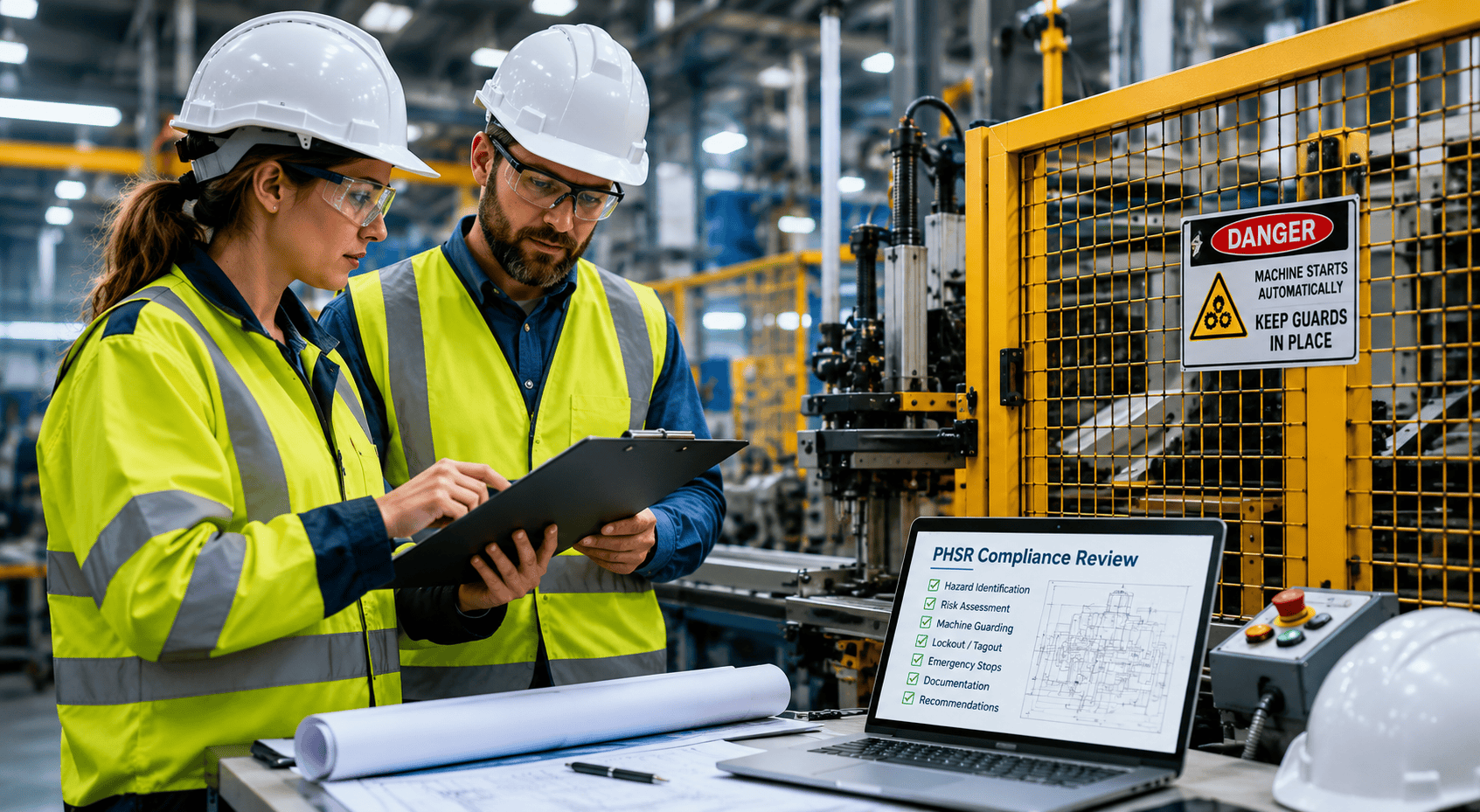
What are you installing or modifying?
Identify the equipment, process, structure, safeguarding system, or integrated installation.
Is the equipment new, modified, relocated, or being integrated?
Changes to existing equipment can be just as important as new equipment installations.
What hazards are involved?
Consider mechanical, electrical, chemical, fire, explosion, combustible-dust, process, and other workplace hazards.
What Ontario requirements apply?
The determination should be made against the applicable occupational health and safety requirements and relevant engineering standards.
Is there any uncertainty?
If the answer is unclear, obtain engineering advice before startup.
PHSR Equipment Checklist
Industrial machinery
Automated machinery
Robotic equipment
Production lines
Conveyors
Safety-control systems
Dust collection systems
Spray booths
Modified machinery
Machine safeguarding
Mixing or processing equipment
Material-handling systems
Imported industrial equipment
Combustible-dust processes
Used industrial equipment
Equipment integrated with existing machinery
Flammable-liquid or solvent systems
For a more detailed decision-making guide, see:
FAQs About PHSR Process
What types of equipment commonly require a PHSR in Ontario?
Does a conveyor require a PHSR?
Does a dust collection system require a PHSR?
Does a robot require a PHSR?
Does modified equipment require a PHSR?
Does used equipment require a PHSR?
Does imported equipment require a PHSR?
Does every new machine require a PHSR?
Who can determine whether a PHSR is required?
PHSR Support for Industrial Equipment
- Dust collection
- Explosion protection
- Industrial process equipment
- Equipment integration
- Automated systems
- Machine modifications
- Industrial safety and compliance

Not Sure If Your Equipment Requires a PHSR?
Send PHSR.com the basic details of your project—including the type of equipment, location, and project information—and the engineering team can help determine the appropriate next step.