PHSR Exemptions: When Is a PHSR Not Required in Ontario?

If you are purchasing, installing, modifying, or commissioning industrial equipment in Ontario, you may be wondering whether a Pre-Start Health and Safety Review (PHSR) is required—or whether your equipment qualifies for an exemption.
The short answer is that not every piece of equipment automatically requires a PHSR simply because it is new. The requirement depends on the circumstances surrounding the equipment, process, protective device, structure, or modification and the specific requirements that apply under Ontario’s occupational health and safety legislation.
This makes understanding PHSR exemptions important for employers, equipment purchasers, manufacturers, contractors, and facility managers. Assuming that a PHSR is unnecessary when one is actually required can create significant compliance and safety risks. On the other hand, commissioning an unnecessary review can create avoidable delays and costs.
This guide explains what businesses should know about PHSR exemptions and situations in which a PHSR may not be required.
Important: This page provides general information about PHSRs in Ontario. Whether a specific piece of equipment or installation requires a PHSR should be determined based on the actual circumstances and applicable legislation. When there is uncertainty, an assessment by a qualified Professional Engineer can help determine the appropriate compliance requirements.
lifting devices

What Is a PHSR?

A Pre-Start Health and Safety Review, or PHSR, is an engineering assessment used to determine whether specified industrial equipment, processes, structures, or protective measures comply with applicable health and safety requirements before they are put into service.
In Ontario, PHSR requirements are primarily associated with Section 7 of Ontario Regulation 851, Industrial Establishments, under the Occupational Health and Safety Act.
The purpose of a PHSR is not simply to inspect whether a machine works. It is intended to identify potential hazards and assess whether applicable requirements have been addressed before equipment or a process is placed into operation.
For a more detailed explanation, see our guide:

Contact Us

This field is required.

Are There PHSR Exemptions in Ontario?

There is an important distinction between a piece of equipment being "exempt from a PHSR" and a situation in which the PHSR requirement does not apply in the first place.
Businesses should not assume that every piece of equipment falls under a universal PHSR exemption simply because it is:
  • New
  • Purchased from a reputable manufacturer
  • Certified by the manufacturer
  • Imported
  • Previously used
  • Similar to equipment already operating at the facility
  • Installed by a qualified contractor
The actual question is whether the equipment, process, protective device, or modification falls within the circumstances for which a PHSR is required under the applicable Ontario requirements.
This distinction is particularly important when dealing with complex industrial installations.

When Might a PHSR Not Be Required?

A PHSR may not be required when the specific circumstances do not trigger the applicable PHSR requirements.
For example, a review may not be necessary simply because an employer has purchased equipment if the equipment or installation does not fall within the applicable provisions requiring a pre-start review.
Similarly, routine activities that do not constitute a qualifying installation, modification, or change may not necessarily trigger a new PHSR.
However, determining this requires looking at the actual situation, rather than relying on the equipment’s name or a general assumption.
The key questions include:

What equipment, process, structure, or protective measure is being installed or modified?

Is it new, modified, relocated, or otherwise being changed?

What hazards are associated with the equipment or process?

What provisions of Ontario Regulation 851 apply?

Are there applicable requirements involving safeguarding, hazardous substances, combustible materials, or other specified hazards?

Has a previous PHSR been completed?

Has the equipment or process been changed since the previous review?

Are there additional Ontario, CSA, ANSI, NFPA, or other applicable standards that need to be considered?

The answers determine whether a PHSR is required and what the engineering review needs to address.

Does Every New Machine Need a PHSR?

No—not every new machine should automatically be described as requiring a PHSR.
This is one of the most common misunderstandings about PHSRs.
The fact that equipment is new does not, by itself, provide enough information to determine whether a PHSR is required. The specific equipment and installation circumstances must be considered against the applicable regulatory requirements.
For example, an industrial facility purchasing a CNC machine, conveyor, dust collection system, mixer, spray booth, or other production equipment should determine whether the installation triggers a PHSR before assuming that a review is either mandatory or unnecessary.
If you are unsure, it is better to resolve the question before commissioning the equipment rather than discovering a compliance issue after the equipment is already operating.

Contact Us

This field is required.

Does Manufacturer Certification Mean a PHSR Is Not Required?

Not necessarily.
A manufacturer may provide documentation demonstrating that equipment was designed, manufactured, or tested according to particular standards. That documentation can be valuable during a PHSR.
However, a manufacturer’s certification does not automatically answer the separate question of whether an Ontario PHSR is required.
A machine may be compliant with its manufacturer’s requirements and still need to be evaluated in the context of the specific Ontario workplace where it will be installed and operated.
The installation environment, connected equipment, safeguarding, controls, process, materials, and workplace conditions can all be relevant.

What About Imported Equipment?

Imported machinery can create additional compliance questions.
Equipment manufactured outside Ontario may have been designed to comply with standards or regulations applicable in another jurisdiction. Those requirements may not be identical to Ontario’s workplace health and safety requirements.
For this reason, an employer should not assume that equipment is exempt from a PHSR simply because:
  • It has a CE marking.
  • It was manufactured in the United States.
  • It was previously operating in another country.
  • It has documentation from the manufacturer.
  • It was inspected before shipment.
The equipment should be evaluated against the requirements applicable to its intended installation and use in Ontario.
dust collection systems

What About Equipment That Has Already Been Reviewed?

A previous PHSR can be an important part of the compliance record, but it should not automatically be assumed to cover every subsequent change.
If equipment is modified, relocated, integrated with new equipment, or incorporated into a substantially different process, the circumstances should be evaluated to determine whether additional engineering review is necessary.
Examples of changes that may warrant further consideration include:
  • New safeguarding
  • Changes to safety controls
  • Modifications to machinery
  • Changes to production processes
  • New material-handling equipment
  • Changes to combustible or hazardous materials
  • Integration with new automated equipment
  • Changes to dust collection systems
  • Installation of new process equipment
The important issue is not simply whether a document exists. It is whether the existing assessment remains applicable to the equipment and process as they currently exist.

Contact Us

This field is required.

Are Routine Repairs or Maintenance Exempt?

Routine maintenance and repairs should not automatically be treated as triggering a new PHSR or as automatically being exempt.
The nature and extent of the work matter.
A repair that restores equipment to its existing condition can be very different from a modification that changes:
  • The machine’s function
  • Its safeguarding
  • Its control system
  • Its operating parameters
  • Its hazards
  • Its integration with other equipment
When maintenance work becomes a modification or installation that affects the safety characteristics of equipment, the PHSR requirements should be considered.

PHSR Exemption Checklist

Before deciding that a PHSR is not required, ask:

Equipment

What equipment or process is being installed?
Is it new, modified, relocated, or integrated with other equipment?

Safety

Does the equipment have safeguarding or safety-related controls?
Does the installation introduce new hazards?
Are hazardous or combustible materials involved?

Process

Is the equipment part of a larger production or automated process?
Has the process changed?

Documentation

Is there an existing PHSR?
Has the equipment changed since the previous review?
Is manufacturer or engineering documentation available?

Regulatory requirements

Does Ontario Regulation 851 apply to the installation?
Are there specific provisions that trigger a pre-start review?
Are additional standards relevant to the equipment or process?

If the answer to any of these questions is unclear, obtain professional advice before making a final decision.
industries we serve

What About Existing Equipment?

The fact that equipment has been operating for years does not necessarily answer whether a PHSR is required.

PHSRs are pre-start reviews, so the circumstances that existed when equipment was originally installed are important. However, an existing machine may subsequently be modified, upgraded, relocated, or incorporated into a new process.

A facility undergoing an expansion or production-line redesign should therefore review its PHSR obligations rather than assuming that existing equipment is outside the scope of consideration.

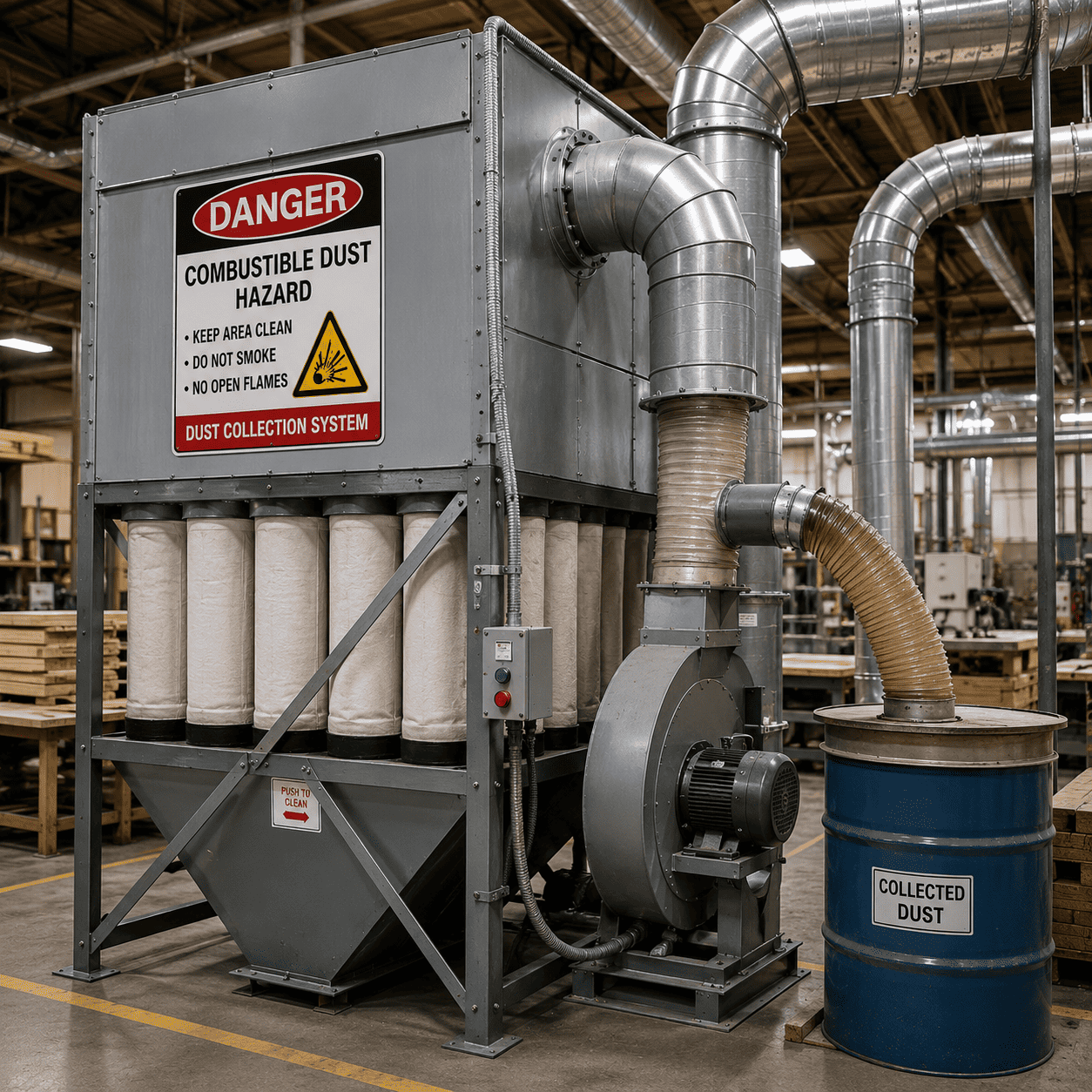
Combustible Dust and PHSR Requirements

Combustible dust deserves particular attention because industrial processes involving dust can create significant fire and explosion hazards.
Examples include facilities handling:
  • Wood dust
  • Food products
  • Agricultural materials
  • Grain
  • Certain chemicals
  • Metal dust
  • Pharmaceutical materials
Dust collection systems, process equipment, conveying systems, and related protective measures may require careful engineering evaluation.
PHSR-related work can also intersect with broader engineering considerations such as dust collection design, explosion protection, equipment integration, controls, and applicable standards.
This is one reason a simple “exempt/not exempt” approach can be misleading. The equipment should be considered as part of the overall process and workplace.

What Should You Do If You Are Unsure?

If you cannot determine whether your equipment requires a PHSR, gather the available information before the equipment is put into operation.
Useful documentation can include:
For example, a review may not be necessary simply because an employer has purchased equipment if the equipment or installation does not fall within the applicable provisions requiring a pre-start review.
Similarly, routine activities that do not constitute a qualifying installation, modification, or change may not necessarily trigger a new PHSR.
However, determining this requires looking at the actual situation, rather than relying on the equipment’s name or a general assumption.
The key questions include:

Equipment specifications

Process descriptions

Engineering drawings

Electrical schematics

Previous PHSRs

Control-system information

Previous inspection reports

Manufacturer information

Applicable certification documentation

Details of any modifications

Hazardous-material information

Installation drawings

Guarding details

A PHSR engineer can use this information to understand the installation and determine what needs to be reviewed.

Can an Employer Decide That a PHSR Is Not Required?

Employers are responsible for ensuring that applicable occupational health and safety requirements are addressed at their workplaces.
However, determining whether a PHSR requirement applies can involve technical and regulatory interpretation.
When there is uncertainty, obtaining engineering advice before equipment is commissioned can provide a much stronger basis for the decision.
A Professional Engineer can review the proposed equipment and installation, identify applicable requirements, and determine whether a PHSR is appropriate.
This is particularly valuable for complex machinery, automated production lines, dust collection systems, hazardous processes, and equipment that has been substantially modified.

Contact Us

This field is required.

FAQs about PHSR Exemptions

There should not be an assumption that there is one simple list covering every situation. Whether a PHSR is required depends on the specific equipment, process, installation, modification, and applicable regulatory provisions.
No. The fact that a machine is new does not, by itself, determine whether a PHSR is required. The applicable requirements and circumstances must be evaluated.
Manufacturer information can be useful, but the employer should ensure that the equipment meets the requirements applicable to the Ontario workplace. Manufacturer certification does not automatically determine Ontario PHSR requirements.
Not necessarily. Product certification and Ontario workplace PHSR requirements are separate considerations.
A modification may trigger the need for further review depending on what was changed and which requirements apply. Significant changes to safeguarding, controls, processes, or equipment integration deserve particular attention.
A qualified Professional Engineer can review the equipment and circumstances and provide engineering advice regarding applicable PHSR requirements.
Do not wait until commissioning. Provide the equipment and project information to a PHSR professional so the requirement can be assessed before the equipment is placed into operation.

Why Getting the Decision Right Matters
A PHSR is intended to identify health and safety issues before equipment is put into operation.
Waiting until after startup to discover that an engineering review was required can create unnecessary disruption. It can also mean that deficiencies need to be corrected after production has already begun.
Resolving PHSR requirements during the planning, purchasing, installation, and commissioning stages can make the process much more efficient.
For equipment manufacturers and suppliers, having the appropriate engineering documentation available can also help customers address their Ontario compliance requirements.
phsr 2

Need Help Determining Whether You Need a PHSR?

Determining whether a PHSR is required is often more complicated than asking whether a machine is simply "new" or "used."
PHSR.com provides specialized engineering assessment and compliance support for industrial equipment and processes in Ontario. The service is backed by Wintek Engineering, an established engineering company with experience dating back to 1994.
The broader engineering team includes experience with industrial equipment and Pre-Start Health and Safety Reviews, providing a strong technical foundation for evaluating equipment and workplace requirements.
If you are unsure whether your equipment requires a PHSR, contact PHSR.com before the equipment is put into operation. Providing a few basic details about your project, equipment, and location can help determine the appropriate next step.
Need to know whether your project requires a PHSR? Contact PHSR.com for an assessment.
Scroll to Top